
Leaving Saigon for Phnom Penh
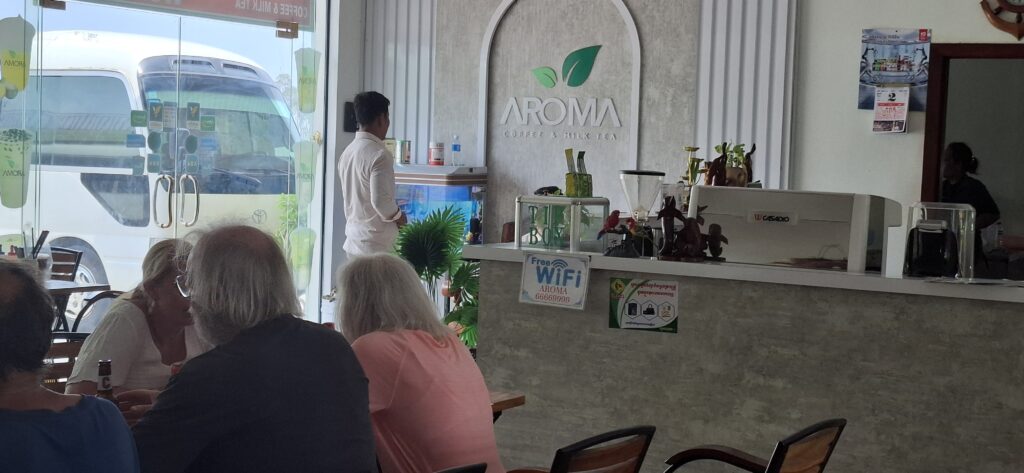
At 7.30 we were on the bus for the Vietnam/Cambodia border. A three hour drive. We stopped after a couple of hours for coffee. Interestingly the cafe was called Aroma Cafe. My niece, Natalie, has a great cafe in Keymer in the UK, with the same name.
Leaving our Vietnamese bus at the border we collected our luggage and filed into the Vietnamese immigration. Painless, but rather slow. Next a walk to the Cambodian side. Here it was a bit more complicated. Some of the group already had e-visas and were directed through the left hand side door. Those, including Dennis and I, who needed to purchase a visa had to go to the right. Our guide, Long, took our passports, US$35 and two completed forms and organised the visas for us all. We then had to head through the left hand door for finger printing, photographing and more passport/form stamping
It was another long ride, with a lunch stop, en route, to Cambodia’s capital city, Phnom Penh. During the journey Long advised us on the relationship between Vietnam and Cambodia. This has often been strained. Historically Cambodia was captured by Thailand and Vietnam on several occasions. During the Vietnam/American war Cambodia was bombed by American B52 bombers for assisting the Viet Cong.
Now an argument is occurring over Cambodia diverting the Mekong water into a canal, financed by China, to link the Mekong River to the Gulf of Thailand to boost trade and reduce reliance on Vietnamese ports. It could significantly damage Vietnam’s agricultural Delta. Vietnam is replying by building a bridge to block entry to the canal.
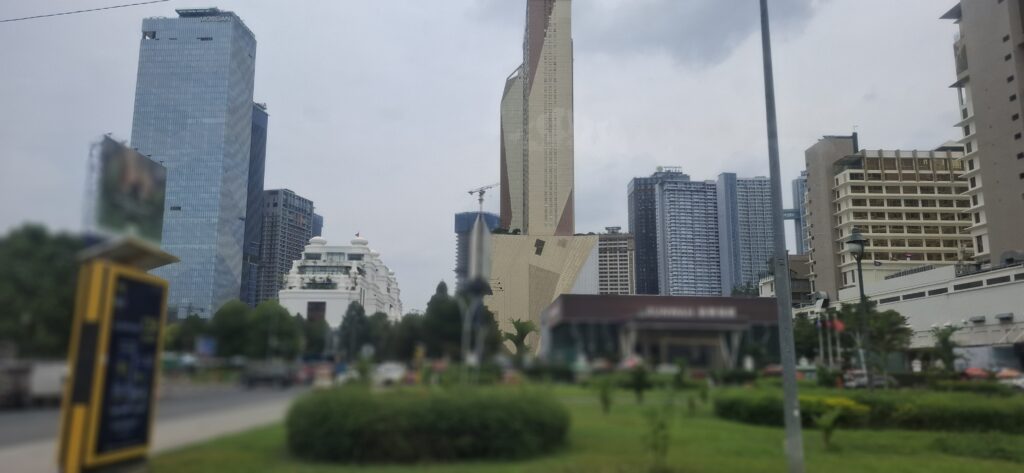
First impressions of Phnom Penh were of a modern, high rise city. Calmer than Saigon, the population is two and a half million people. The total population, now, of Cambodia is just over 18 million. Remarkable when a third of the population were killed or starved to death under the Pol Pot Regime from 1975 -1979, reducing the population to 4 million.
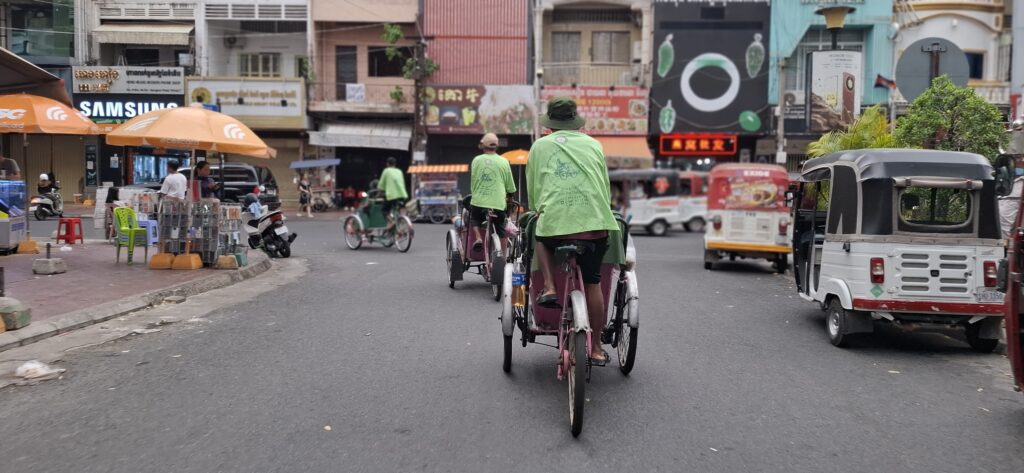
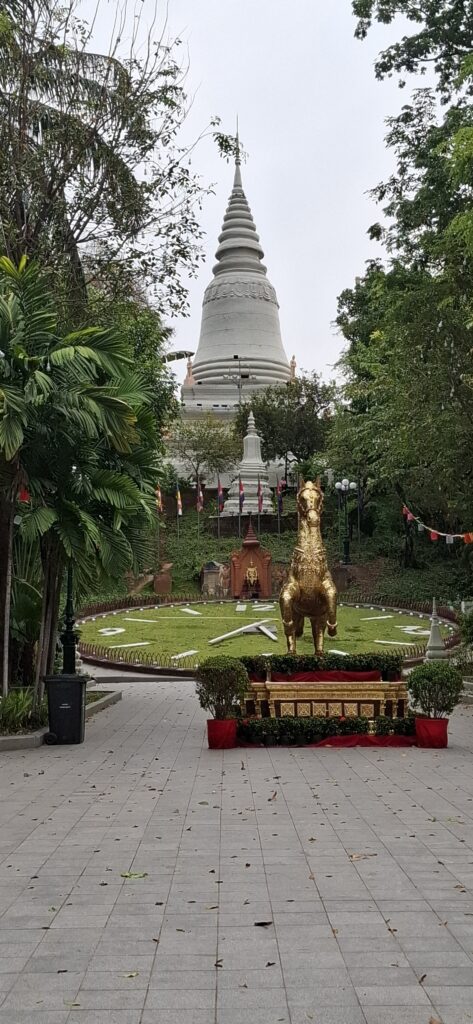
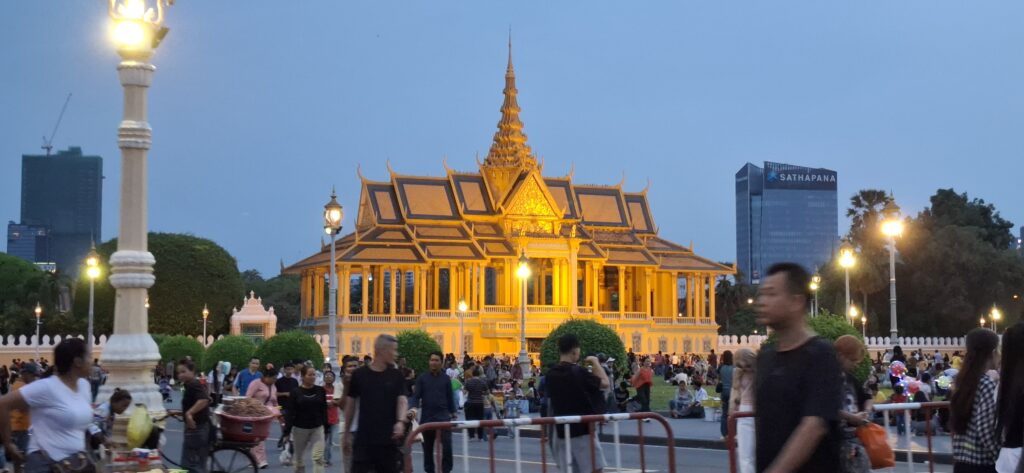
After a short rest, we set off on a cyclo tour around Phnom Penh. Visiting the main sights of interest, Wat Phnom Daun Penh, the Independence Monument, His Majesty Norodom Sihanouk’s statue, the Royal Palace and the night market. The market was really buzzing. Music, food stalls, clothes, handicrafts etc. We had dinner at a market side restaurant. I had chicken Amok, a local speciality, I think one of the best meals of the journey.
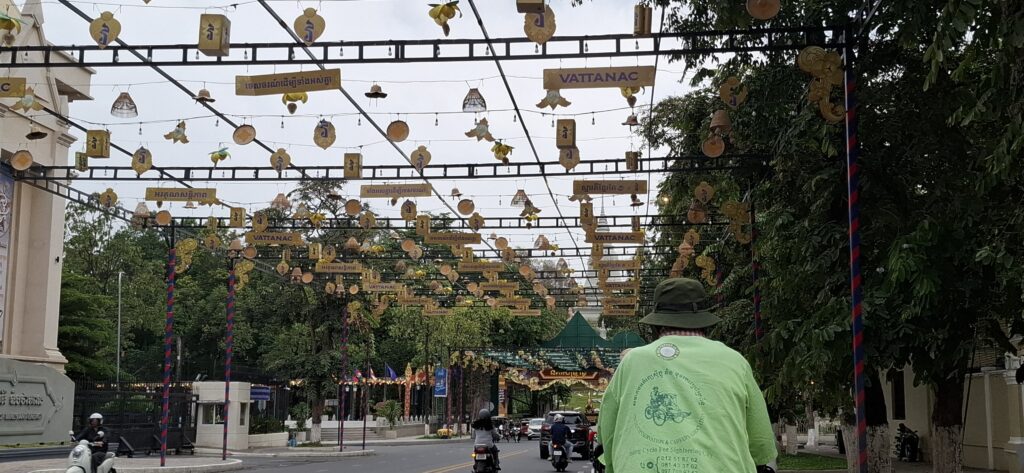
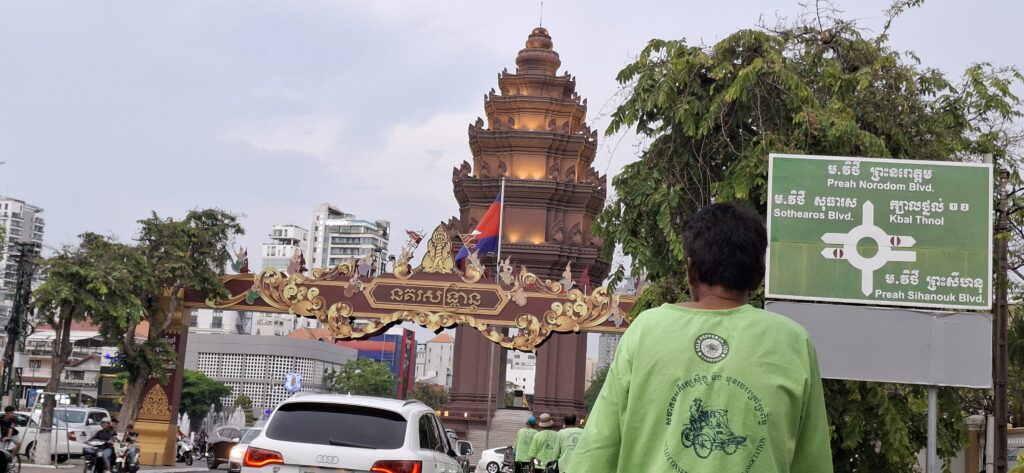
Independence Monument
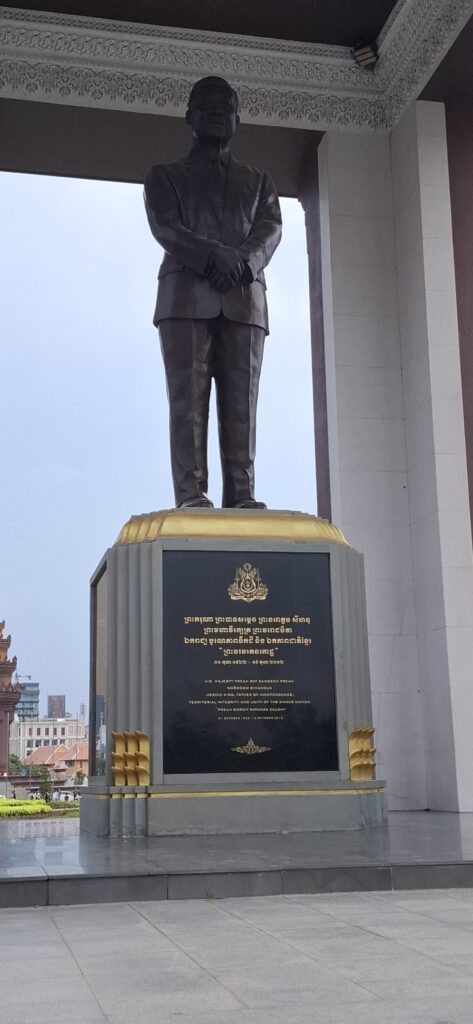
King Sihanouk
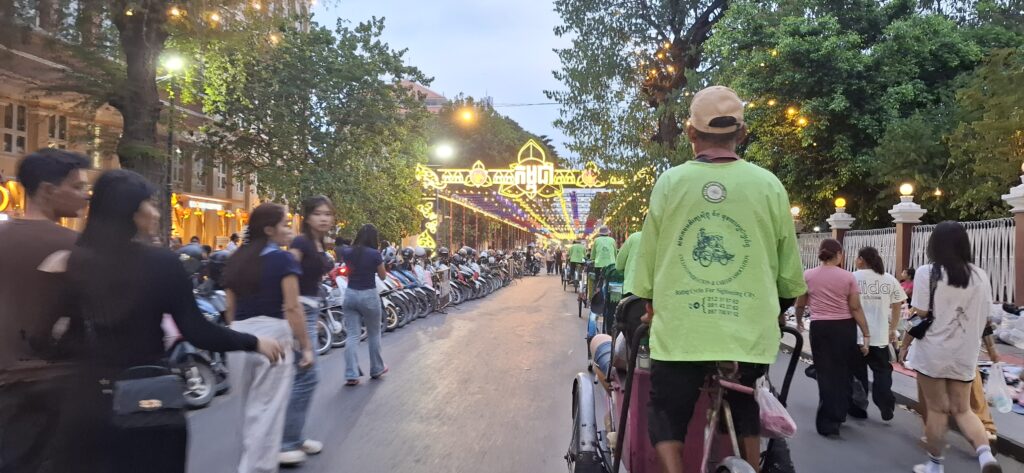
Monday, 4th May. A harrowing morning visiting the Security Prison 21 and the Killing Fields
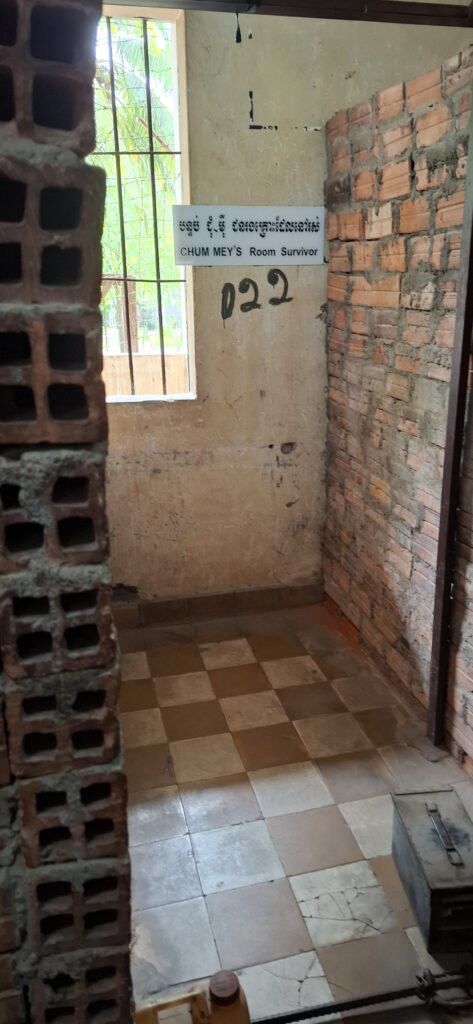
Our first stop was the Tuol Sleng Genocide Museum (Security Prison 21). Formerly the Tuol Svay Pray High School, the Khmer Rouge converted it to a prison and interrogation centre.
From 1975 to 1979, when he was overthrown, Pol Pot was the revolutionary dictator who ruled Democratic Kampuchea. He was the leader of Cambodia’s Communist movement, known as the Khmer Rouge. Pol Pot believed in erasing all traces of modernity, capitalism and class division and returning to an agrarian “Year Zero”. He abolished money, religion and private property.
To prevent retaliation, intellectuals, professionals, former government officials and ethnic minorities were targeted. Wearing glasses, speaking a foreign language, having soft hands or anything that suggested an urban background or literacy could be a death sentence.
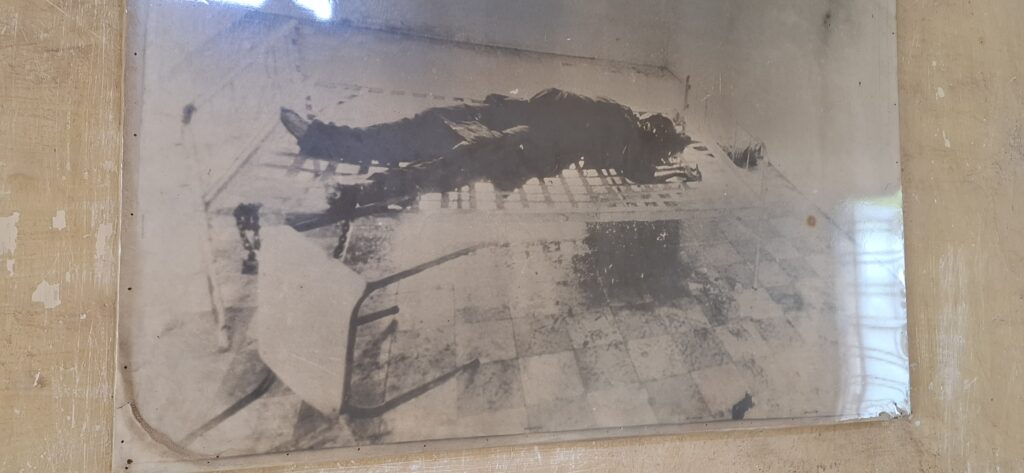
The Khmer Rouge established thousands of prisons and execution sites across the country, the most notorious being Prison 21. Up to 17,000 prisoners were detained and tortured here, only 12 are thought to have survived. The brick cells have been preserved, along with harrowing photographs of tortured and executed prisoners.
Sadly we learned of a young Kiwi who had died here. Kerry Hamill had the misfortune to be driven into Cambodian waters by a storm while on a sailing adventure. He was horribly tortured and killed. Here is a BBC audio Witness audio. A chilling and moving story.

Click on the link below to hear the story :-
https://www.bbc.com/audio/play/w3ct5ymw
Choeung Ek Killing Field
We visited Choeung Ek, the most significant site, about 15kms south of Phnom Penh, where prisoners from Prison 21 were brought for execution. To save bullets many victims were killed with agricultural implements, bamboo sticks or by striking them against trees.
The Choeung Ek memorial park houses a Buddhist stupa filled with thousands of skulls, bones and clothing remnants collected from the mass graves.
Our guide was very touching. As a young child aged 7 – 9 he had been forced to work in the fields. Not strong enough to dig with a hoe he had to carry baskets of earth to build dams. He also lost 4 of his siblings and his father. It was certainly a sobering morning.
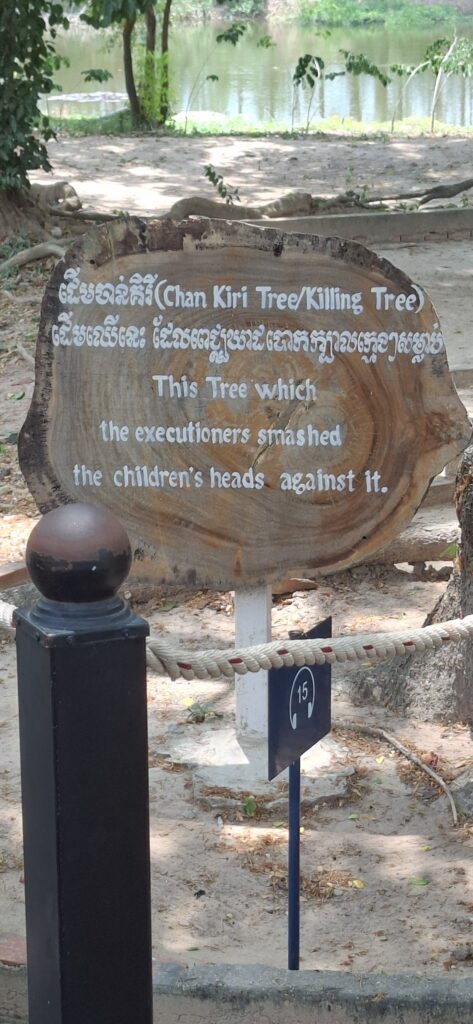
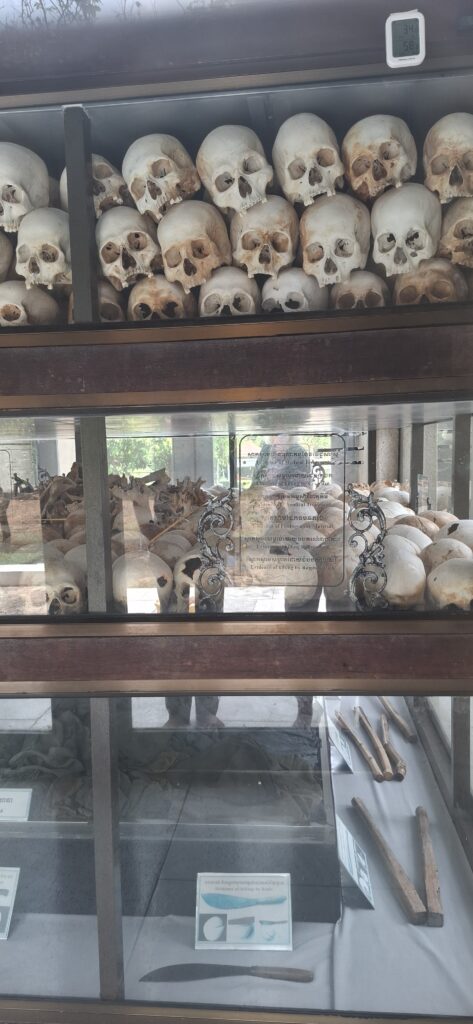
Pol Pot is considered one of the world’s most brutal despots. We look at these memorials here and are horrified, yet unbelievably we still have other despots perpetrating genocide and getting away with it with impunity now.
Tuesday, 5th May. From Phnom Penh to Siem Reap
Today was mostly spent on the bus, it being a 6 hour drive. We did have a coffee and lunch break. At our first stop, Long took us to the local insect market. During the Pol Pot regime when everyone was forced to work in the fields, food was simply insufficient. To try and supplement their diet, people caught and ate insects. It appears they now have a taste for them. On display were tarantulas, frogs, cockroaches, crickets, grubs and small quails, plus their eggs.
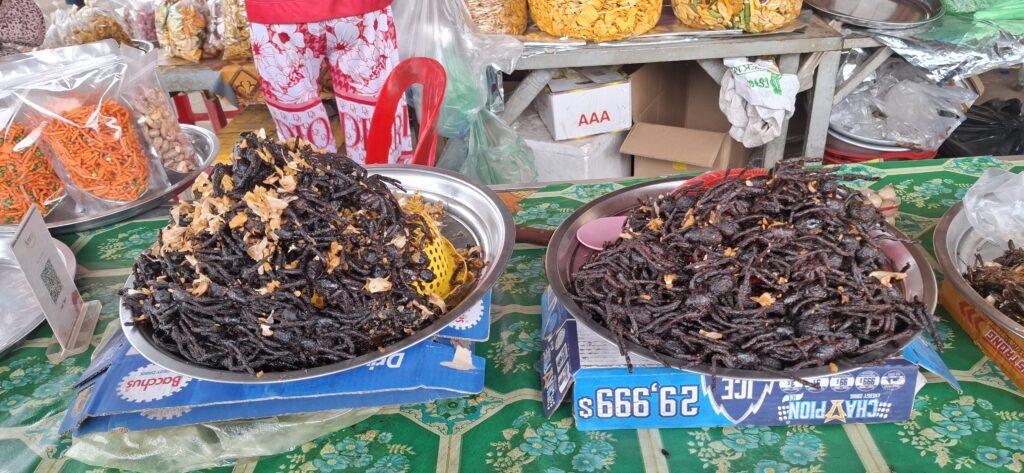
Fried Tarantulas.
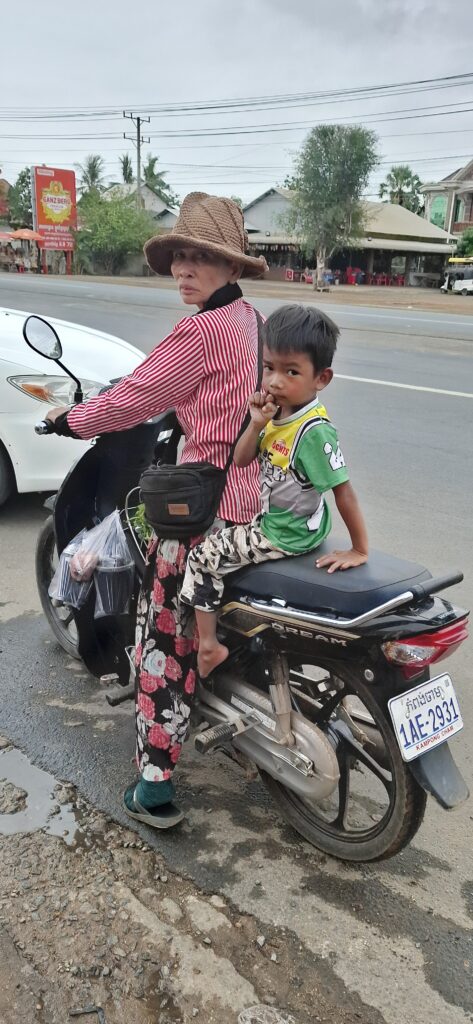
Most popular form of transport for all.
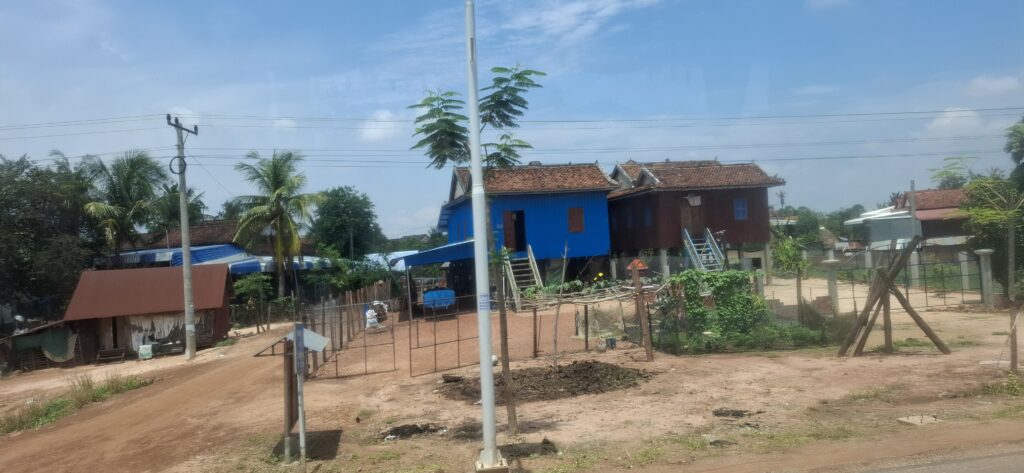
The scenery became quite rural. Cambodia seems poorer than VIetnam. The houses are very different. Being mainly flat and subject to possible flooding, most houses are built on stilts.
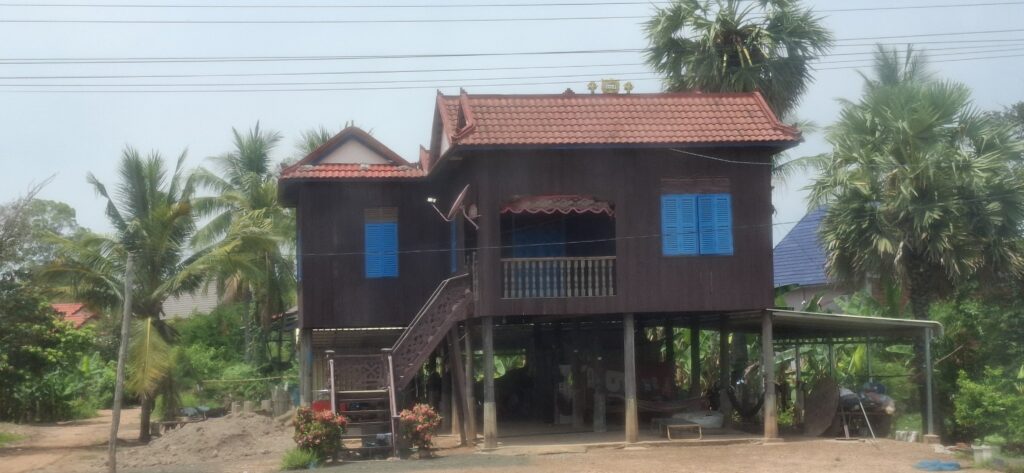
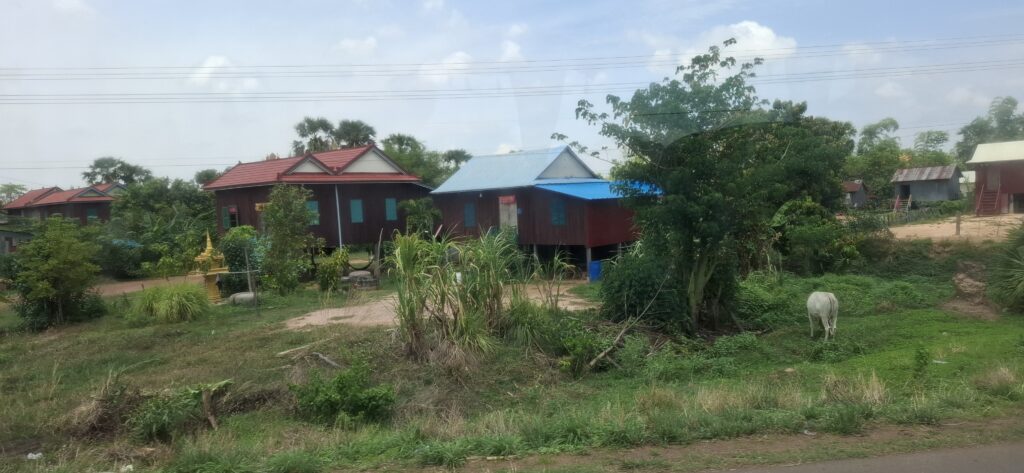
Almost every property has a shrine of varying sizes.
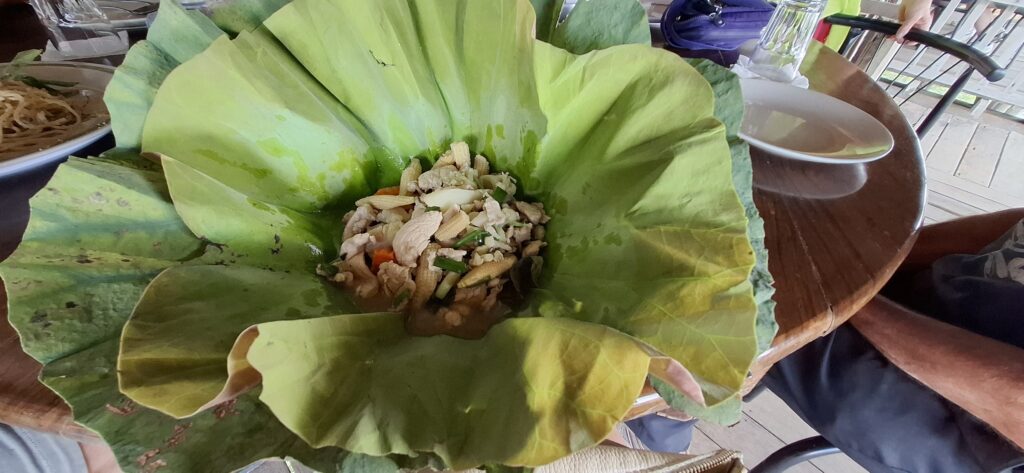
We stopped for lunch overlooking a distant lake with water buffalo feeding nearby. I had a delicious and beautifully presented meal. Chicken in a lotus leaf.
Arriving at our hotel in the late afternoon, we had a short rest before joining Long for an orientation walk. Our visit included Pub Street, which as it sounds is full of bars and restaurants and the enormous covered market, selling everything you can think of. After a brief wander on our own, we indulged in drinks at a Pub Street bar, before meeting up with Long and the rest of the group at 6.30.
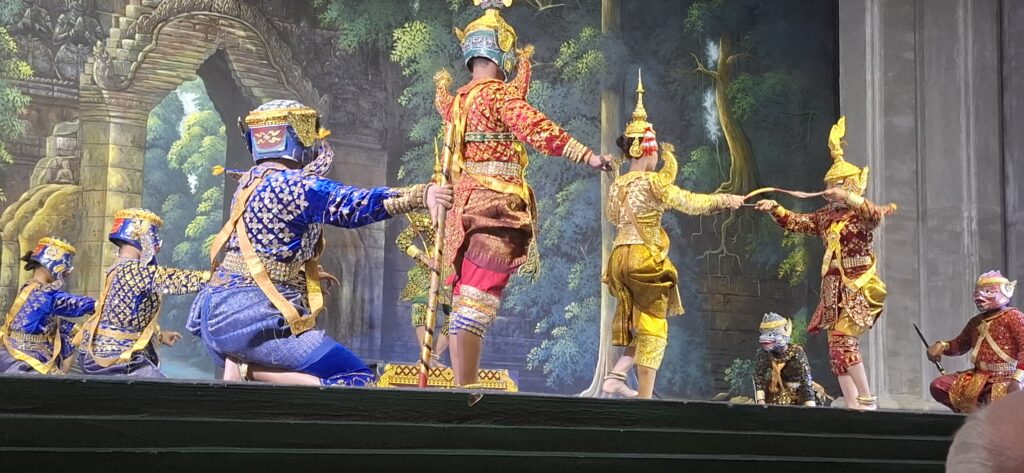
Long had organised tuk-tuks to take us to the Apsara Dinner and Dance Show at Morakot Angkor Restaurant. This was a very large theatre and restaurant where we had an extensive buffet dinner and watched traditional Khmer dancing and martial arts.
Wednesday, 6th May. Angkor Wat.
Up at the ghastly time of 04.15. The idea being to visit Angkor Wat to see the sunrise. Arriving in the dark the sky soon lightened to a pretty pink. We waited for the sun to rise over the temple, in vain. Thick clouds decided to take over.
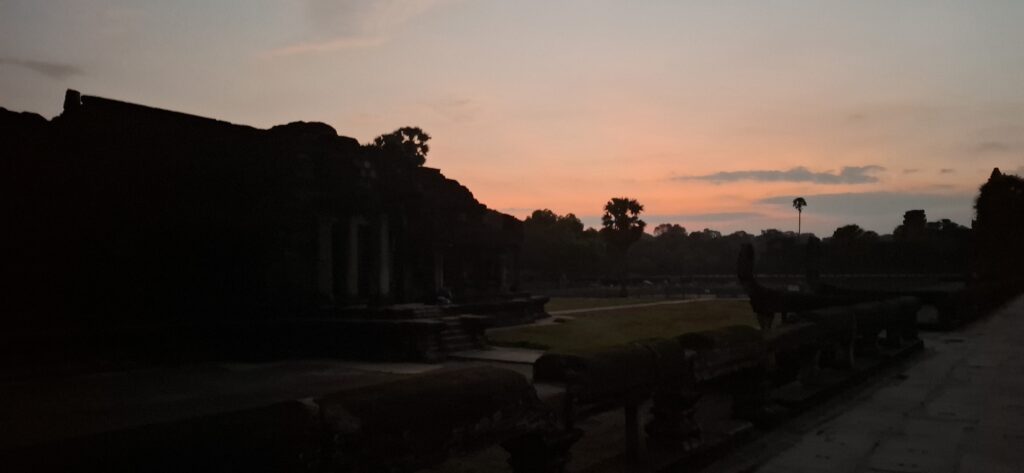
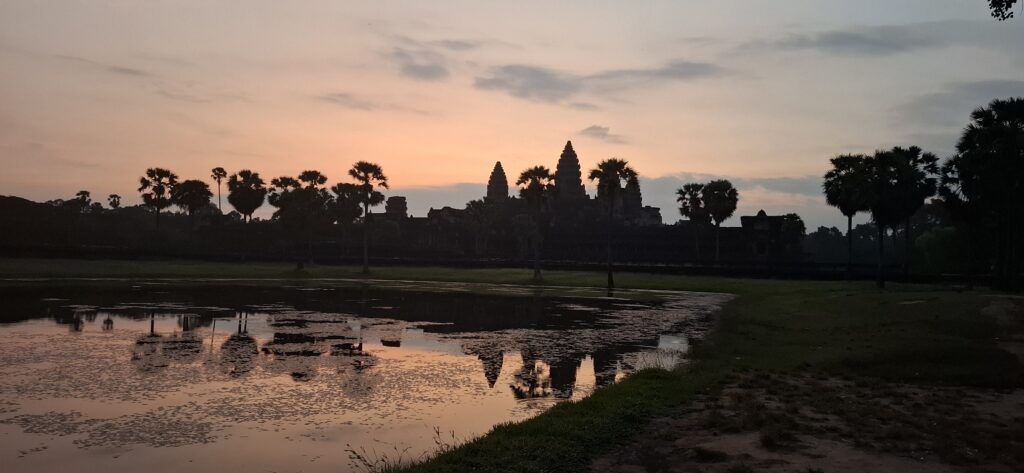
Angkor Wat is the world’s largest religious monument, covering 162.6 hectares. Built in the early 12th century by King Suryavaram 11, it was originally a Hindu temple dedicated to Vishnu, before becoming a Buddhist site. Noted for its Khmer architecture it is a UNESCO World Heritage site and Cambodia’s top tourist attraction.
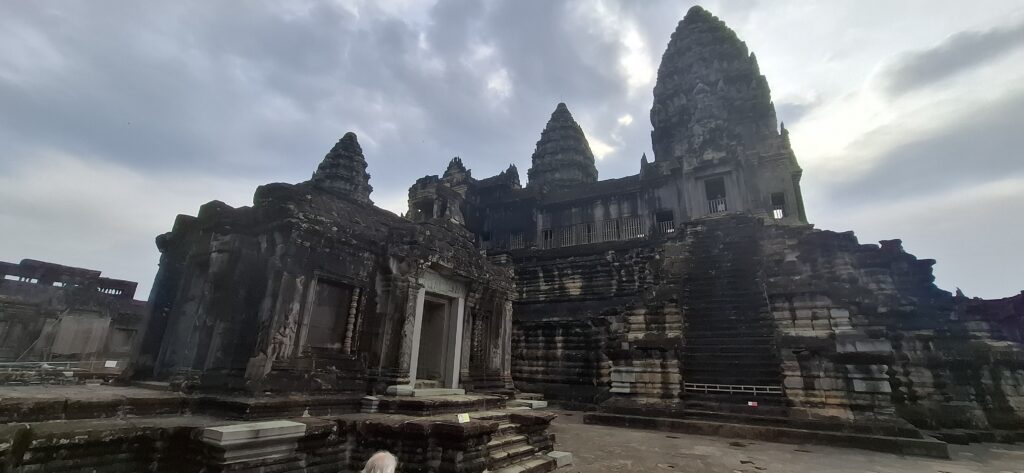
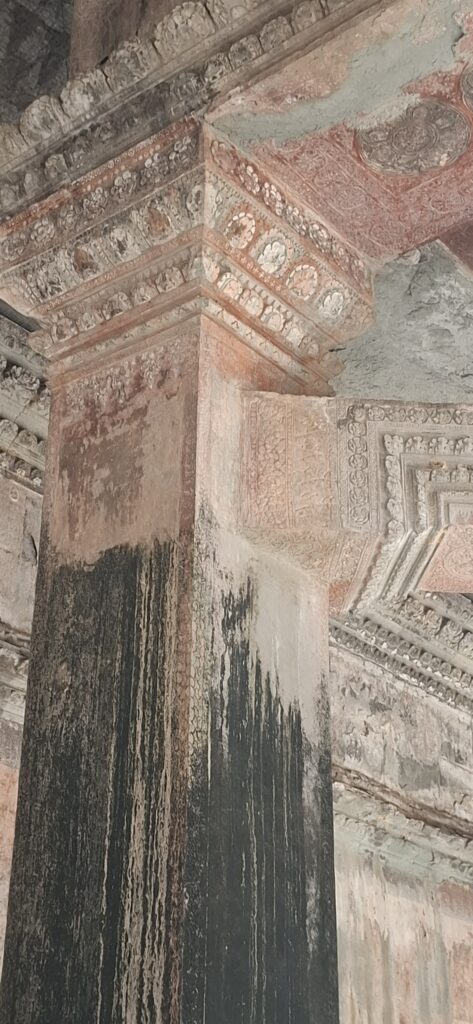
The temple took 37 years to build and every stone was decorated with carvings. Originally coloured with lacquer, most has now been eroded away with age and the elements.
We returned to the hotel at 0900 for breakfast followed by a much needed shower. Despite being early in the day it was already in the low 30’s and very humid. We now have a free afternoon and meet again at 7.30 this evening when we are going to a circus. I’m letting Dennis take over from here.
Views: 41
Great to see you are having a wondeful time, I can so relate to your Cambodia experiences, Toul Sleng, also several days cycling in the area and great experiances cycling all around Siem Reap, so many temples, so many questions, great intersesting part of the world,
Great Blog
Hi Ash. Yes the temples are amazing and spread everywhere as you said. Tomorrow we fly to Bangkok and on to London the next day. So, South East Asia is nearly over. Will be good to get to U.K. and some cooler weather. Has been very hot as we’re in the height of the hottest time of year. Could not imagine cycling in these temperatures 🤔